Posted On March 19, 2026
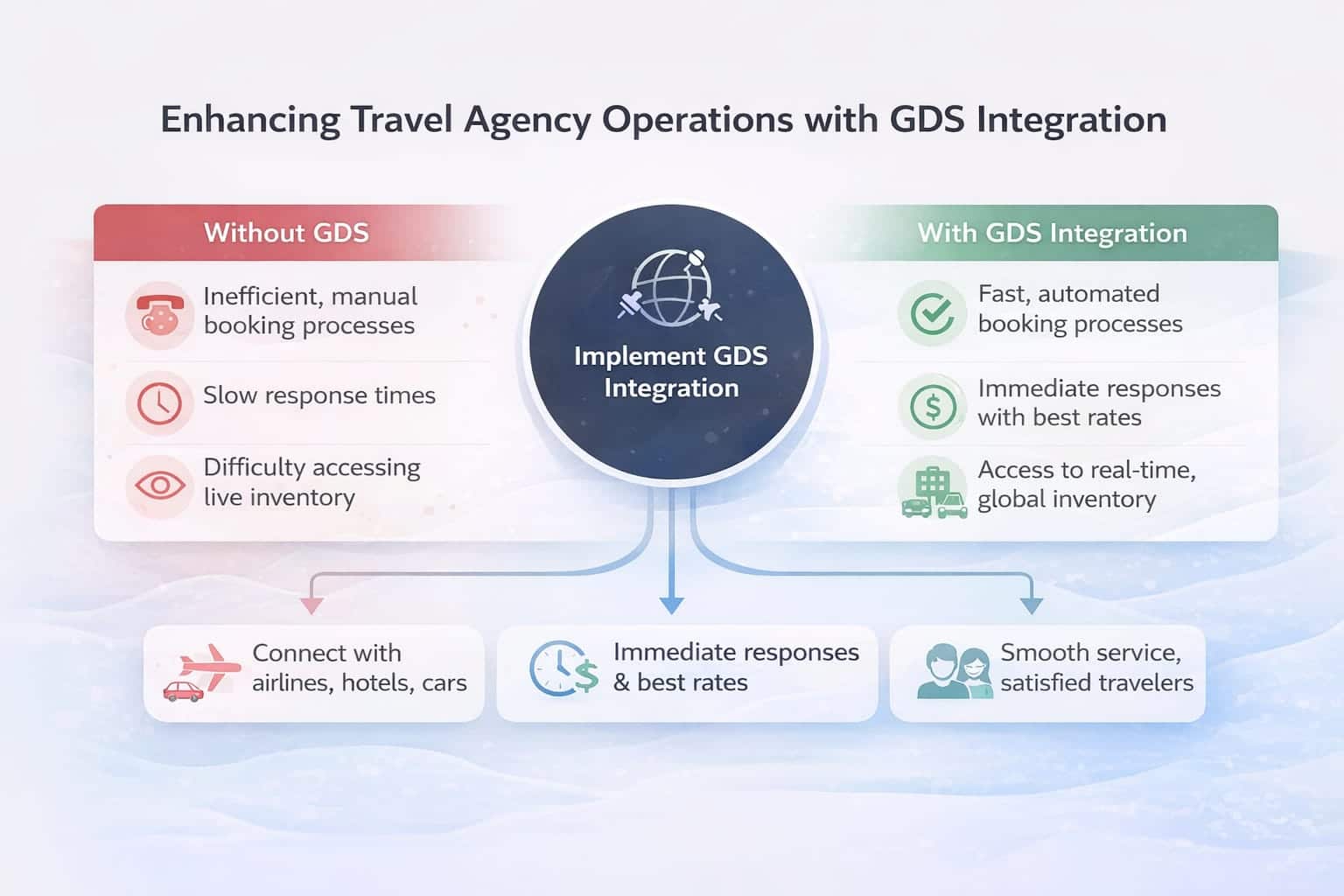
The improvement of the technology sector and the advent of the internet have changed the general process of operations undertaken by travel agencies. Bookings are no longer done over long phone calls or in never-ending spreadsheets. Customers nowadays demand immediate responses, the right prices, and smooth service. That is where GDS integration can be used to facilitate and enhance customer experience, saving money and time in the long term. It helps travel agencies connect with airlines, hotels, and car rental companies in real time within a single system.
Boutique travel planners, corporate travel management companies, and destination management firms must know how to connect with a GDS to effectively cater to the needs of global travelers.
What exactly is GDS integration?
GDS, or Global Distribution System, is a central platform that unites travel service providers and travel agents, bringing them under a single umbrella. A travel agency can book flights, hotels, car rentals and so on in real time through GDS APIs. Users no longer need to navigate through multiple airlines’ websites with the effective integration of the GDS system.
Why GDS integration matters
Having real-time access enables agencies to manage multiple bookings, minimize errors, and cater to the direct needs of the customers. Here’s what GDS integration allows you to do:
- Check and book live inventory, anytime
- Handle cancellations, refunds, and changes faster
- Show accurate prices in multiple currencies
- Improve back-office tasks like invoices and payment tracking
Different ways to integrate a GDS
There’s no one-size-fits-all method. Your choice depends on your business size, goals, and budget. Here are three popular approaches:
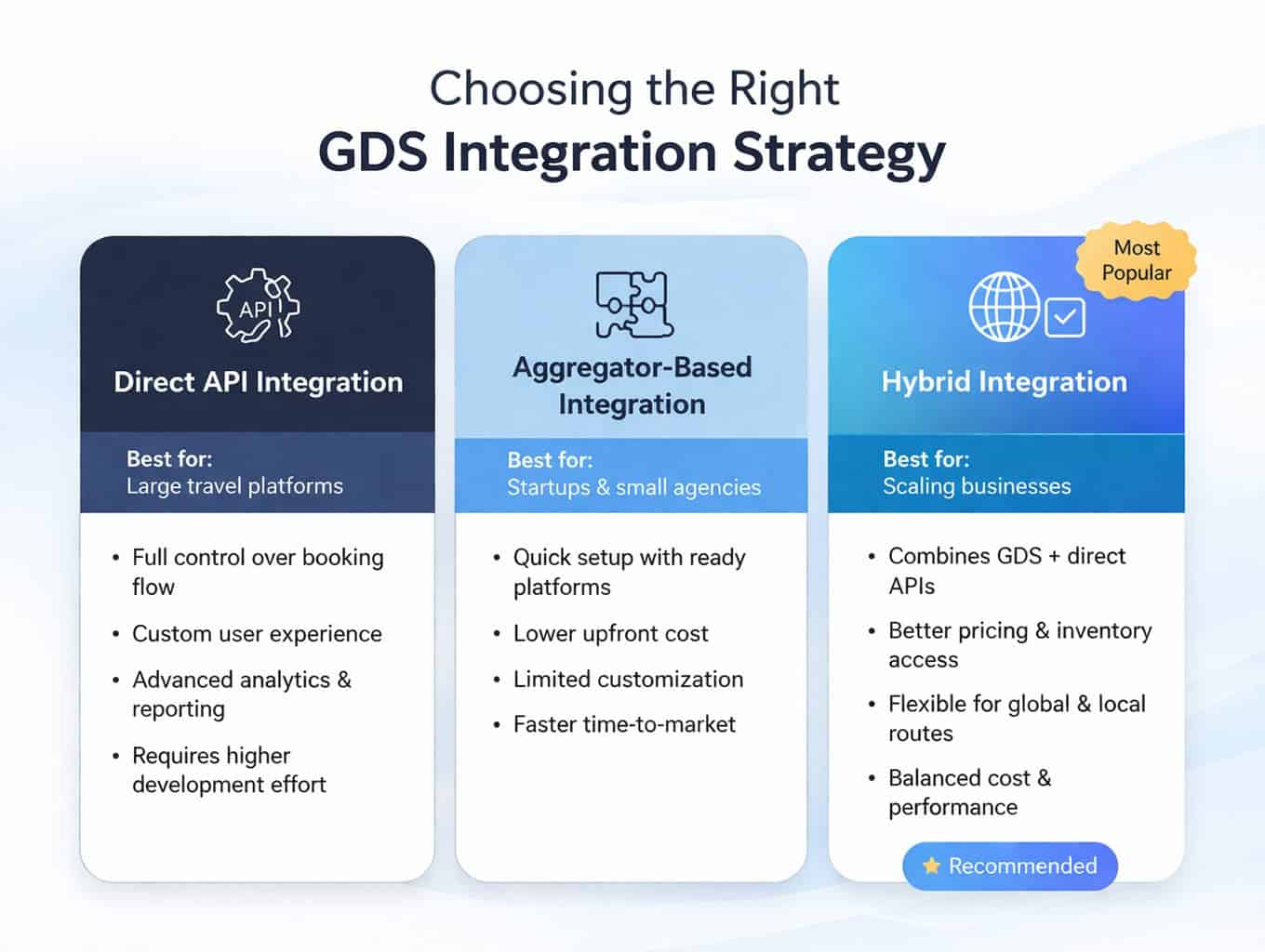
1. Direct API integration
This gives you full control over your booking process. It’s ideal for larger agencies or those with in-house tech teams. Why it works:
- Live updates on flights and fares
- Tailored user experiences
- Advanced reporting tools
2. Aggregator-based integration
Aggregators are ready-made platforms that bring GDS and non-GDS content together. You don’t need heavy development, and setup is quicker. Why it works:
- Lower upfront costs
- Faster to go live
- Ideal for small or new agencies
3. Hybrid integration
This is a flexible option. You combine GDS content with direct APIs from low-cost carriers or hotel chains. Why it works:
- Broader travel options for clients
- Better pricing control
- Works well for both international and local routes
What you need before getting started
- IATA or ARC accreditation: Needed for direct ticketing
- Technical team or partner: For setting up and testing APIs
- Support from GDS provider: Ensure they offer developer tools and onboarding help
- Time for certification: Most GDSs require a testing phase before you go live
Final thoughts
In travel, technology does not substitute the human touch — it only improves the existing system. GDS stimulates automated booking, streamlines services, makes travel easier, and offers additional options to customers.
Therefore, regardless of your role — whether you are using an aggregator or building a full-scale system with direct APIs — the correct strategy will enable you to grow with confidence in the modern travel ecosystem. Allow GDS to do the heavy lifting, and you do what you do best: creating memorable travel experiences.
Recent Posts
Comparison of Top Travel Back-Office Platforms
Read Post
Flight Refunds & Rebookings Made Simple: A Practical Guide for Travel Agents
Read Post
SEO Trends 2026: Challenges & strategies that work
Read Post
How to Implement a Travel CRM for Your Business
Read Post