Posted On March 31, 2026
For travel agencies, tour operators, DMCs, and TMCs operating across multiple branches, maintaining well-structured financial records across different locations is essential. Inter-branch reconciliation ensures that all transactions — including bookings, refunds, commissions, and supplier payments — are accurately captured between branches, eliminating discrepancies and potential revenue loss.
Without an efficient reconciliation process, businesses risk revenue leakage, cash flow disruptions, and compliance exposure. According to a Global Business Travel Association (GBTA) report published in 2023, reconciliation gaps account for 42% of revenue leakage in multi-branch travel enterprises. This guide explores the importance of inter-branch reconciliation, common pitfalls, and proven strategies — along with tools to streamline the entire process.
The significance of Inter-Branch Reconciliation
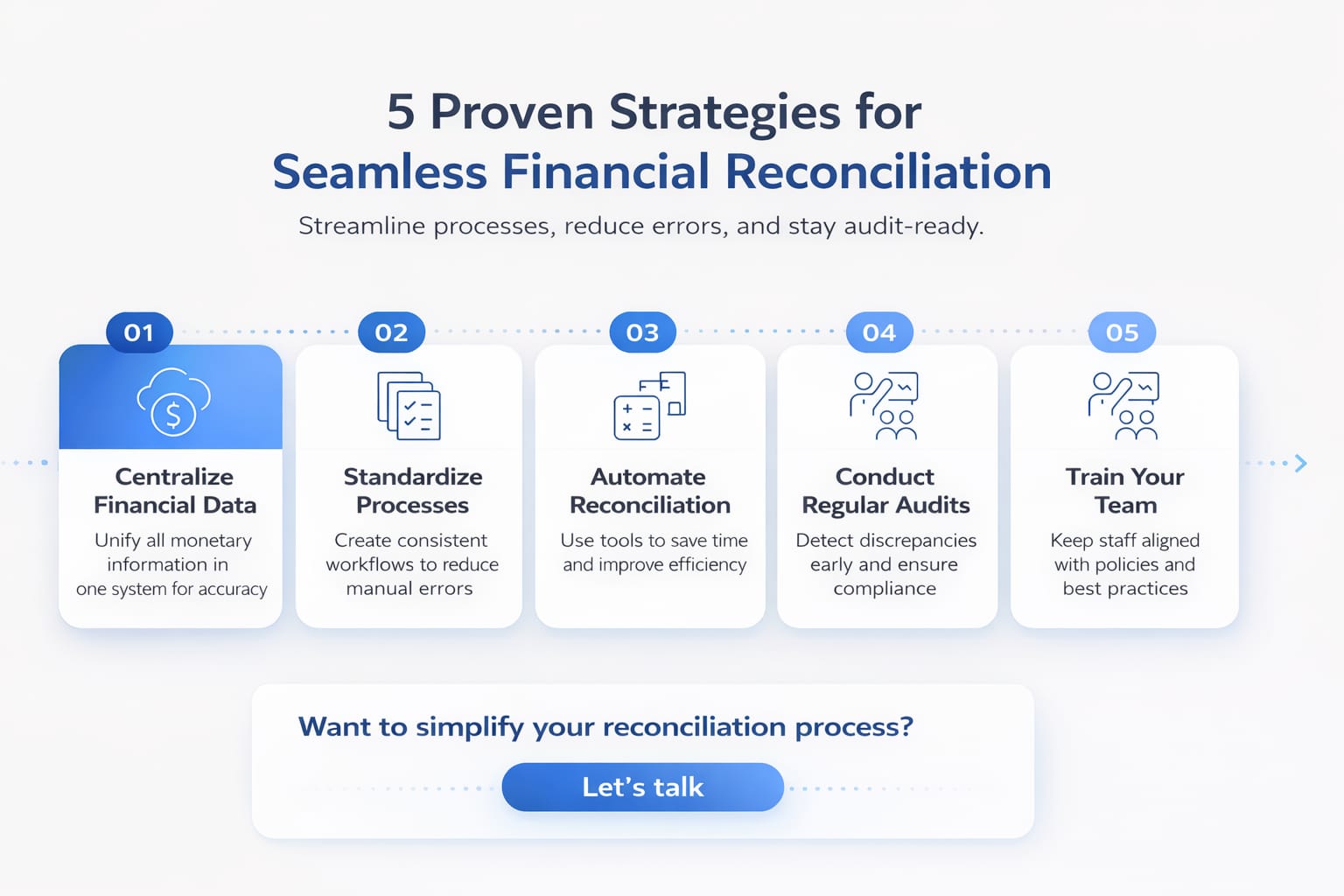
In a multi-branch travel business, transactions occur across different systems, currencies, and time zones. Reconciliation plays a critical role in maintaining financial integrity and operational transparency. Here’s why it matters:
- Leakage Prevention of Revenue – Unmatched transactions can lead to lost income from unrecorded reservations, refunds, or commissions. Frequent reconciliation ensures every dollar is accounted for. The U.S. Travel Association notes that unrecorded transactions cost the travel agency sector between 5–7% of total annual revenues; regular reconciliation bridges this gap.
- Enhancing Visibility of Cash Flow – Monitoring inter-branch payments and collections helps central finance teams maintain liquidity and invest confidently in growth.
- Minimizing Accounting Mistakes – Manual data entry often leads to duplicate invoices or misallocations. Automation reduces human error significantly.
- Ensuring Compliance – Accurate books are essential for audits, tax reporting, and meeting regulatory requirements across different jurisdictions.
Travel Agencies Common Reconciliation Problems
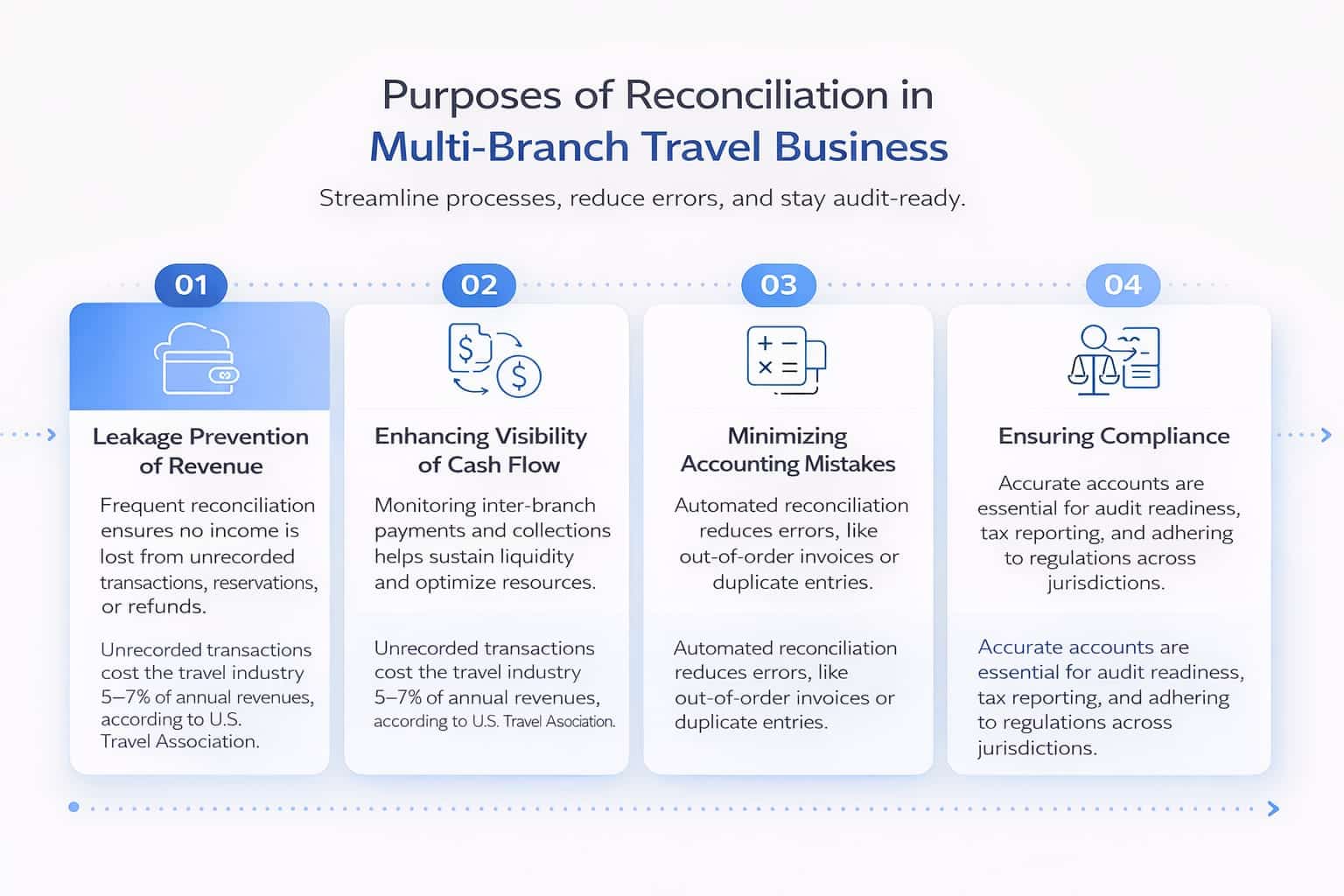
Despite its importance, many travel businesses face operational hurdles that make reconciliation complex and time-consuming.
- Diverse Booking Systems – Using multiple reservation tools (Amadeus, Sabre, domestic CRMs) leads to inconsistent data formats, requiring manual consolidation efforts.
- Multi-Currency Transactions – Global operations introduce foreign exchange variations; without real-time tracking, reconciliation mismatches become frequent.
- Late or Absent Records – Delays in sharing invoices, refund receipts, or commission statements between branches slow down the entire process.
- High Transaction Volumes – During peak seasons, the surge in bookings and refunds can overwhelm manual reconciliation workflows.
Optimal solutions to seamless reconciliation
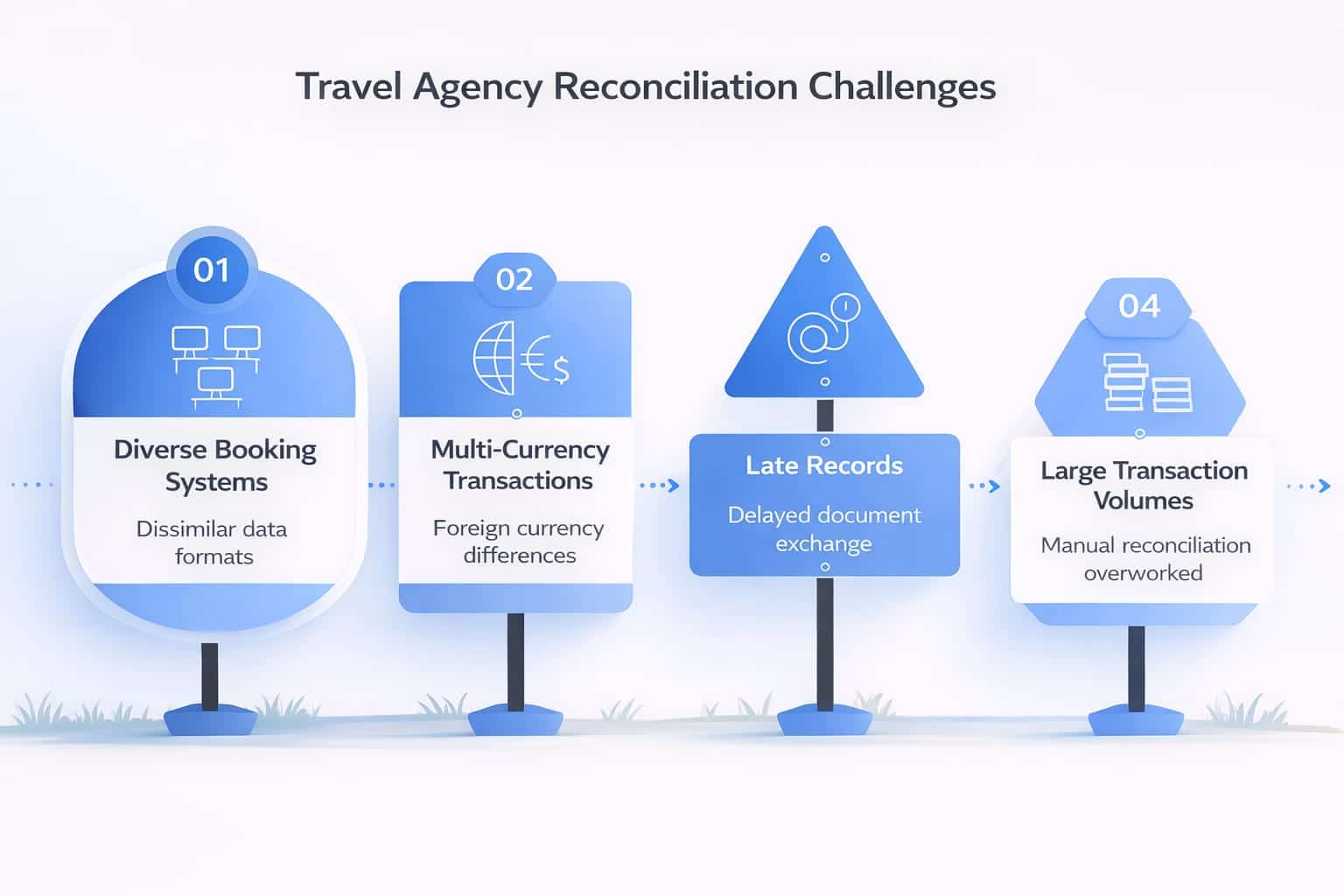
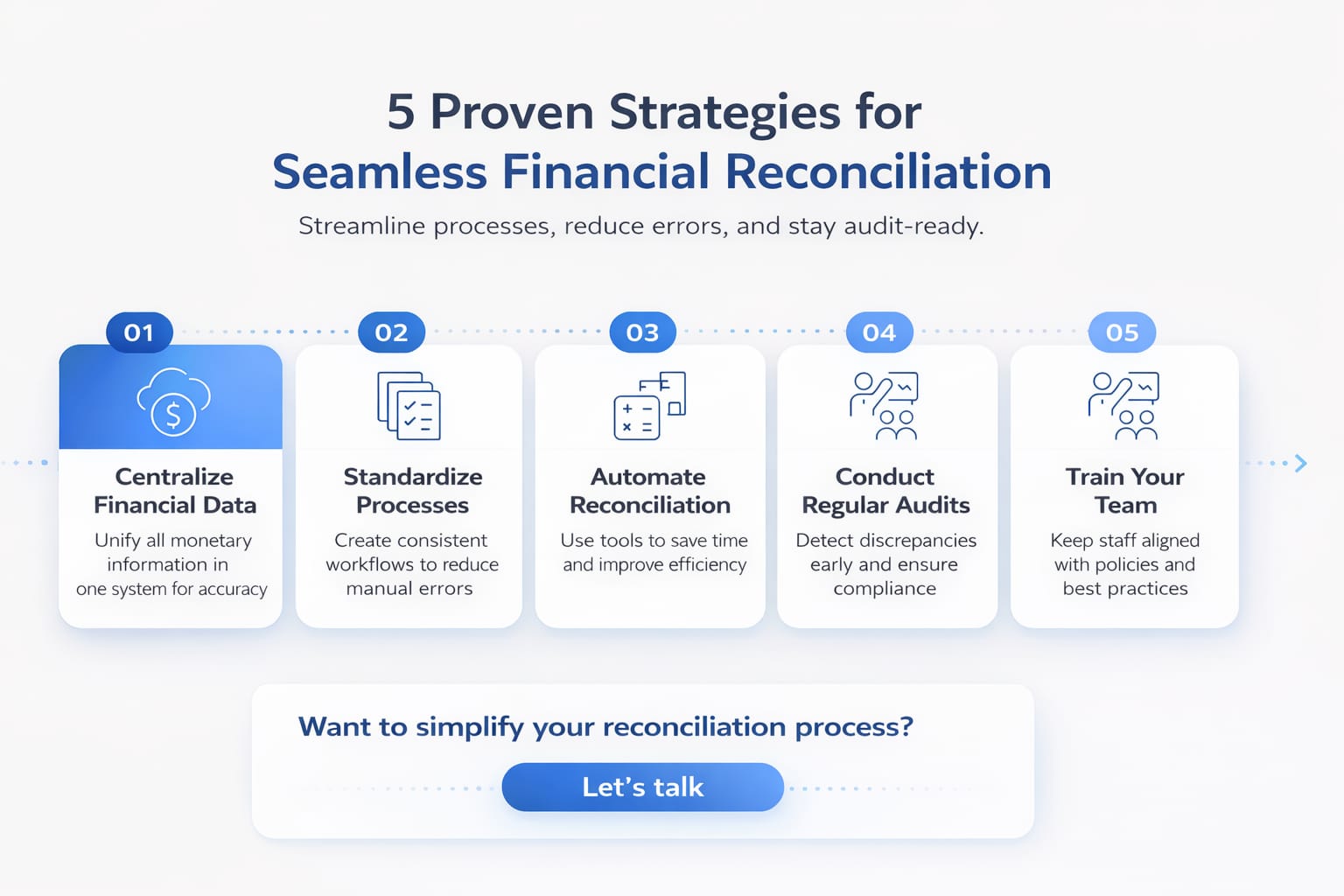
Implementing a structured approach to inter-branch reconciliation eliminates friction and delivers measurable financial accuracy. Below are five proven strategies:
1. Centralize Financial Information
A cloud-based accounting system (e.g., QuickBooks, Xero, or travel-focused platforms like Tramada) creates a single source of truth, allowing every branch to record transactions in real time. This reduces silos and improves visibility across the organization.
2. Standardize Processes
Adopt a uniform chart of accounts, clear invoicing protocols, and consistent refund/commission tracking policies. Standardization minimizes discrepancies and ensures every branch follows the same financial framework.
3. Automate Reconciliation
AI-powered tools such as BlackLine or ReconArt automatically match transactions, while GDS integrations sync booking data directly with accounting software. Automation cuts manual effort and increases accuracy.
4. Carry out Frequent Audits
Schedule weekly or monthly reconciliations to catch discrepancies early. A central finance team should oversee these audits to maintain consistency and accountability across branches.
5. Staff Training & Compliance
Train branch accountants on reconciliation protocols and implement role-based access controls to prevent unauthorized adjustments. Well-trained staff are key to sustaining financial accuracy.
Recommended Tools for Travel Agencies
Selecting the right technology stack is crucial for achieving efficient inter-branch reconciliation. Below is a comparison of popular tools tailored to travel agencies, TMCs, and DMCs.
| Tool | Best For | Key Feature |
|---|---|---|
| QuickBooks Online | General accounting & multi-currency support | Bank feed automation, real-time reports |
| Xero | Small to mid-sized agencies | Real-time reconciliation, project tracking |
| Tramada | TMCs & corporate travel | Native GDS integration, mid-office automation |
| BlackLine | Large agencies with high transaction volume | AI-powered matching, journal entry automation |
| ReconArt | Customizable reconciliation | Automated workflows, configurable matching rules |
| FACTS – Travel accounting software | Travel agencies, tour operators, DMCs | End-to-end financial automation, inter-branch reconciliation module, real-time reporting |
Conclusion: The Future of Financial Accuracy
For multi-branch travel agencies, efficient inter-branch reconciliation is far more than a back-office necessity — it’s a strategic enabler that protects revenue, ensures regulatory compliance, and supports scalable growth. By consolidating financial data, embracing automation, and fostering collaboration across branches, travel businesses can transform reconciliation from a burden into a competitive advantage.
As the travel industry continues to evolve, the ability to maintain real-time financial visibility across locations will separate agile operators from those weighed down by administrative friction. Start by evaluating your current reconciliation gaps, select the right digital tools (including FACTS – Travel accounting software), and empower your teams with standardized processes — your bottom line will reflect the difference.
📊 Stay ahead with modern financial workflows — accurate reconciliation builds resilient travel enterprises.
Recent Posts
Inter-Branch Reconciliation: A Guide to Reconciliation across Branches
Read Post
Step-by-Step Strategy for Small Travel Agents to Leverage NDC
Read Post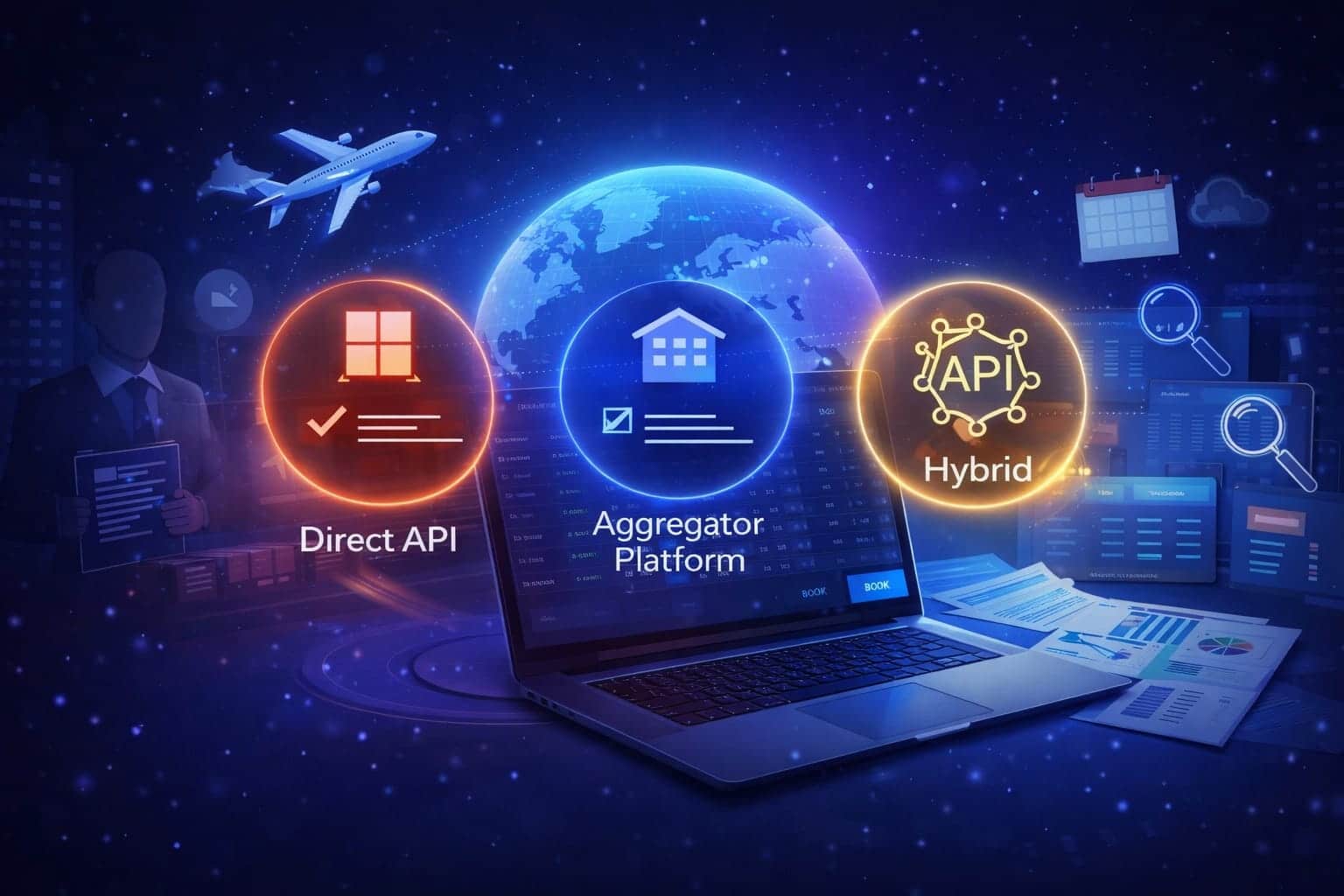
GDS Integration Approaches for Modern Travel Agencies
Read Post
The Ultimate Guide to Choosing the Best Corporate Booking Tool for Your Company
Read Post